Blog · Research
We trained microbes to eat plastic faster. Here's how.
Standard composts treat PLA as something unfamiliar. We changed that.

Standard composts treat PLA as something unfamiliar. We changed that.

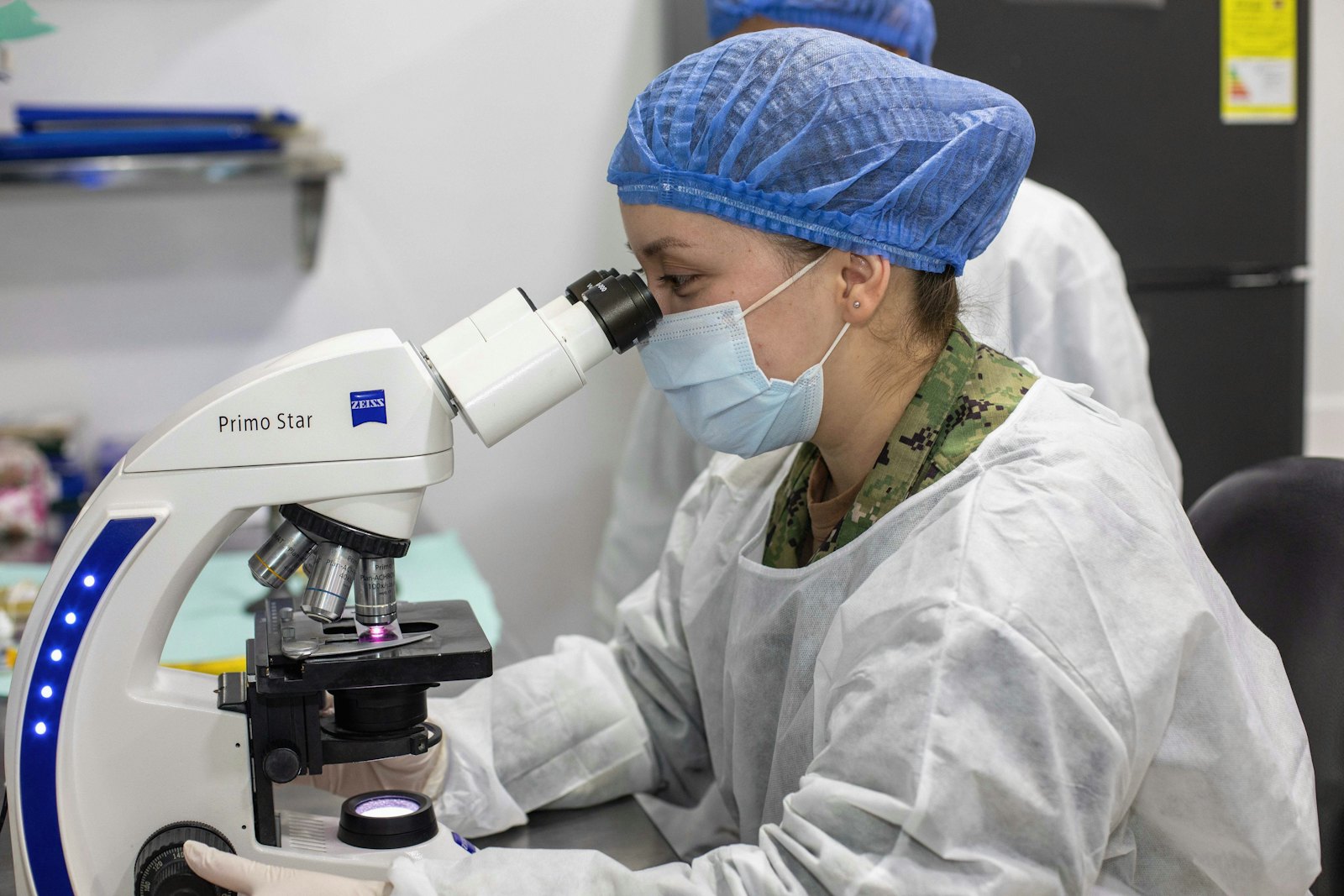
If you read the materials page on this site, you already know that PLA is a polymer of lactic acid, made from plant sugars, and that it breaks down under industrial composting into water, CO₂, and biomass. That's the textbook description. The version that's interesting if you actually run a composter is messier, and it's been the focus of our research work for the past several years.
The short version: most microbes in a typical compost pile are not well-equipped to digest PLA. They can do it eventually, but PLA is an unfamiliar substrate to most strains they encounter, it doesn't appear in nature in the volumes a soil microbe would have evolved to handle. So a generic compost feedstock that includes PLA tends to take longer than the same feedstock without it.
That's a problem if you're trying to run a closed loop with a five-day pickup cycle. Either you accept slower batches and run more compost machines, or you find a way to give the microbes a head start. We chose the head start.
The first project, back in 2022, was a screening study. We took soil samples from sites where PLA had been buried or composted for years, old industrial composting facilities, university research plots, and grew the microbial communities in conditions that selected for PLA degradation. Anything that couldn't survive on PLA as its main carbon source got starved out. Anything that thrived got isolated and characterized.
What came out was a shortlist of about a dozen bacterial strains that could digest PLA at meaningfully higher rates than the average compost microbe. Some were already known in the literature, certain Bacillus and Geobacillus species; certain actinomycetes, and a few were genuinely surprising. We tightened the list to four primary strains based on temperature tolerance (50–60 °C, since that's where our compost machine runs) and growth rate.
Going from a Petri dish to a compost machine inoculant is its own engineering problem. The strains have to grow reliably in batch fermenters, survive whatever processing keeps them stable until use, and be active when you re-introduce them to the compost machine. We've spent a lot of time on the storage end, different strains tolerate different stabilization methods, and a strain that loses 80% of its viability in storage isn't usable at scale.
The current production process is run from our research lab in Taichung, in close collaboration with our factory team. The output is a stabilized inoculant, picture a yogurt-starter culture, but for PLA, that ships in chilled containers and gets dosed into our compost machines at the start of each batch.
Adding the inoculant doesn't change the chemistry of what happens in the compost machine. PLA still hydrolyzes into smaller chains, then into oligomers, then into lactic acid, then into CO₂ and water. What changes is the speed of each step.
In our compost machine, with active inoculant dosing, a typical batch finishes in about 3 days, with under 2% of the input PLA left as identifiable fragments at the end of the batch. The remaining maturation phase, done off-site at the Jysk Muld yard, takes care of the rest. The unbroken-down material at end-of-batch is the variable that matters most for downstream off-take partners; if you're trying to sell a peat-free compost, plastic fragments in the bag are not what your buyer wants.
We're conservative about claiming a specific speed-up multiplier. The honest answer is "meaningfully shorter than an uninoculated batch under the same conditions, with much less unbroken-down material at end of run", the exact ratio depends on feedstock variability we don't control.
The compost machine is engineering. The microbes are biology. The batch time is what happens when those two cooperate.Dr. Shu Yuan Yang, Director of Research
The current cultures are tuned for PLA at 50–60 °C. We've been screening for strains that handle starch-based bioplastics (PHB, certain PHA blends) because we expect those to enter our product mix as the factory diversifies. We're also looking at lower-temperature strains for venues where we can't run a fully heated compost machine, small canteens, smaller events, because the system constraints are different there.
Long-term, the dream is a strain library you can match to a feedstock and a temperature profile the same way you'd pick a yeast for a wine. We're not there yet. But the underlying point, that closed-loop systems are not just "compost it and walk away" but have specific biological requirements you can engineer for, is where I think the field is heading. The product on the tray and the compost machine at the back of the venue are the visible halves of the story. The microbes are the invisible third.
The closed-loop page shows where the trained cultures plug into the system, how they get dosed into the compost machines, and what comes out the other side.