Blog · Materials science
What "compostable" really means, and what it doesn't.
The word has become a halo. It deserves better.

The word has become a halo. It deserves better.

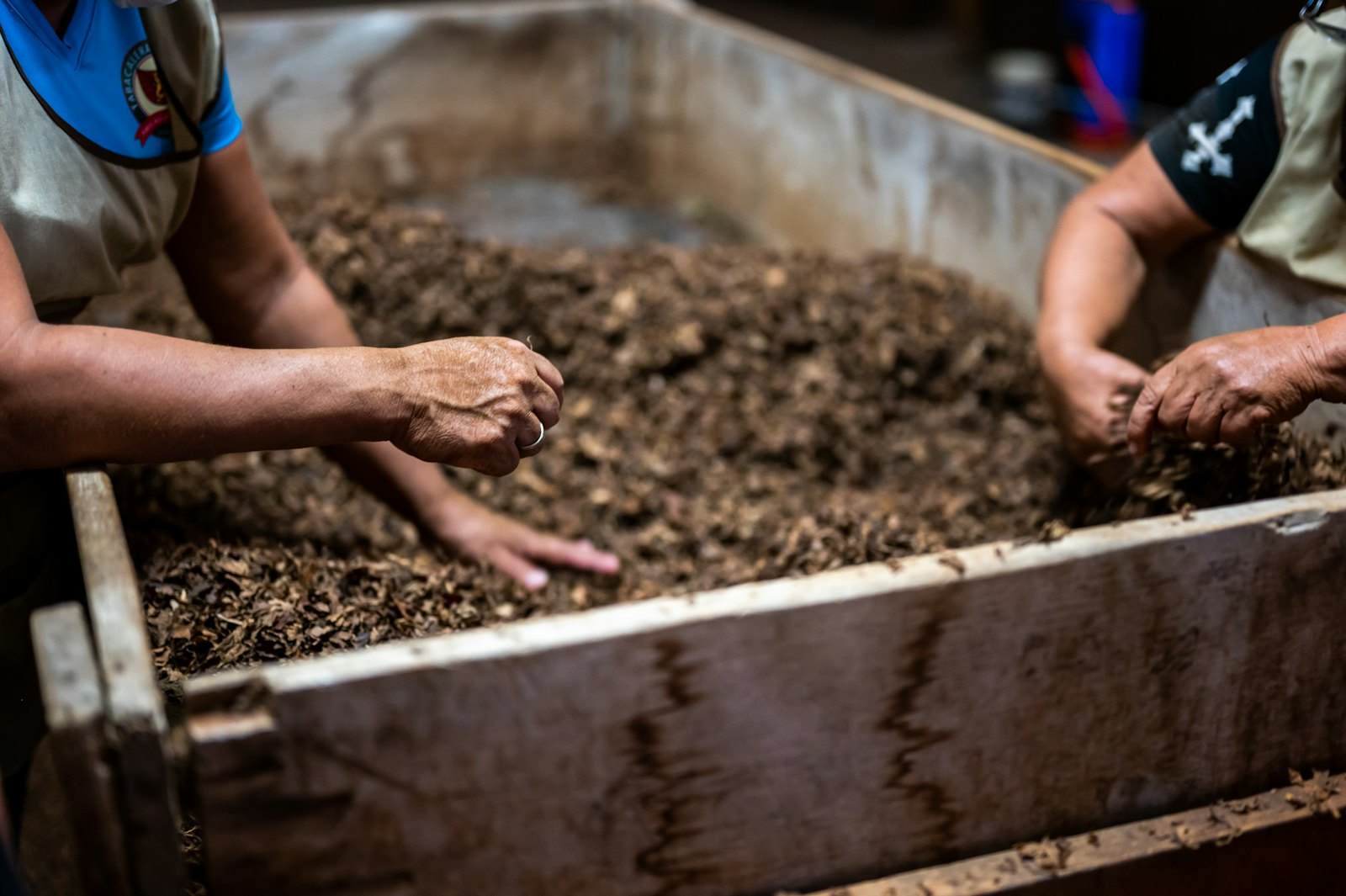
The label "compostable" is doing more work in 2026 than at any point in its short marketing life. It appears on coffee cups at festivals, on bin liners in supermarkets, on the back of fast-fashion mailers. Often the same word is being used for products that need very different end-of-life conditions to do what the label suggests. The result is a quiet erosion of trust, and, frustratingly for those of us who actually care about the science, a halo effect that protects products that don't deserve it.
So this is a careful look at what compostable actually means in industrial-grade certifications, what it does not mean, and where we think the honest line is.
The certifications you'll see referenced. EN 13432 in Europe, ASTM D6400 in the US, ISO 17088 globally, OK Compost INDUSTRIAL in many markets, share a common backbone: a product is "compostable" if, under defined industrial composting conditions, it disintegrates into pieces under 2 mm within 12 weeks, biodegrades into CO₂, water, and biomass within 6 months, leaves no toxic residue, and doesn't impair the quality of the resulting compost.
Read those words carefully. They specify the conditions. They don't claim the product breaks down anywhere. The defining word is industrial, typically 50–60 °C for several months, with active microbial decomposition, oxygen, and moisture in tight balance.
Outside those conditions, in a backyard pile, a garden bed, a body of water, a landfill, most certified-compostable plastics behave like any other plastic. Slowly, stubbornly persistent. PLA in seawater is essentially inert.
You'll occasionally see "home-compostable" claims, sometimes backed by OK Compost HOME or TÜV's home-compost mark. These exist for narrower categories, typically thin films, tea bags, certain bioplastics blended for ambient breakdown.
The marketing temptation is to slap that mark on anything compostable, hand-wave the difference, and let the consumer make assumptions. We've watched this happen across food packaging in particular. The problem isn't the certifications themselves; the problem is what gets claimed when nobody's verifying. A home-compostable label on a product that needs industrial conditions to actually break down isn't a bonus, it's a misdirection.
Our products are certified to EN 13432 and OK Compost INDUSTRIAL, and we don't claim home-compostability for any of them. That's a deliberate choice, not a limitation we're trying to hide.
The reason: a compostable product is only meaningful if there's a system that captures and processes it under the right conditions. We can guarantee those conditions inside a contained venue with our compost machine on-site and a defined off-take pipeline. We cannot guarantee them in a million backyards. So we built the company around the contained case, stadium, festival, office canteen, processing plant, where the loop actually closes.
If a compostable product ends up in landfill, the certification didn't save it. The system did, or didn't.Dr. Shu Yuan Yang, Director of Research
The most honest sentence we can write about our products is something like: "Certified compostable under EN 13432; will break down into CO₂, water, and biomass in industrial composting at 50–60 °C within several months. Outside those conditions, treat as conventional plastic."
It's longer than "100% compostable!". It's also true. The shorter version creates expectations the product can't keep, and when those expectations break, the trust collapse hurts everyone in the category, including the products that actually do what they say.
If you're sourcing compostable products for an event, a venue, or a packaging line, ask the supplier two questions:
If the supplier can't answer the second question clearly, the certification is doing a lot of trust on its own, and that's where things tend to fall apart in practice.
None of this is meant to be discouraging. Compostable plastics, paired with a real system, are one of the cleanest ways out of the single-use trap. But the label without the system is exactly the kind of half-truth that has made consumers cynical about every "green" claim. We'd rather be the careful version of compostable than the loud one.
The science is the easy part. The conversations about which conditions actually exist in the field are the harder, more useful ones, we'd love to keep having them.