Blog · Operations
From the back of Parken to a bag of peat-free compost.
One match-day cup. Five days. A new bag of peat replacement.
One match-day cup. Five days. A new bag of peat replacement.
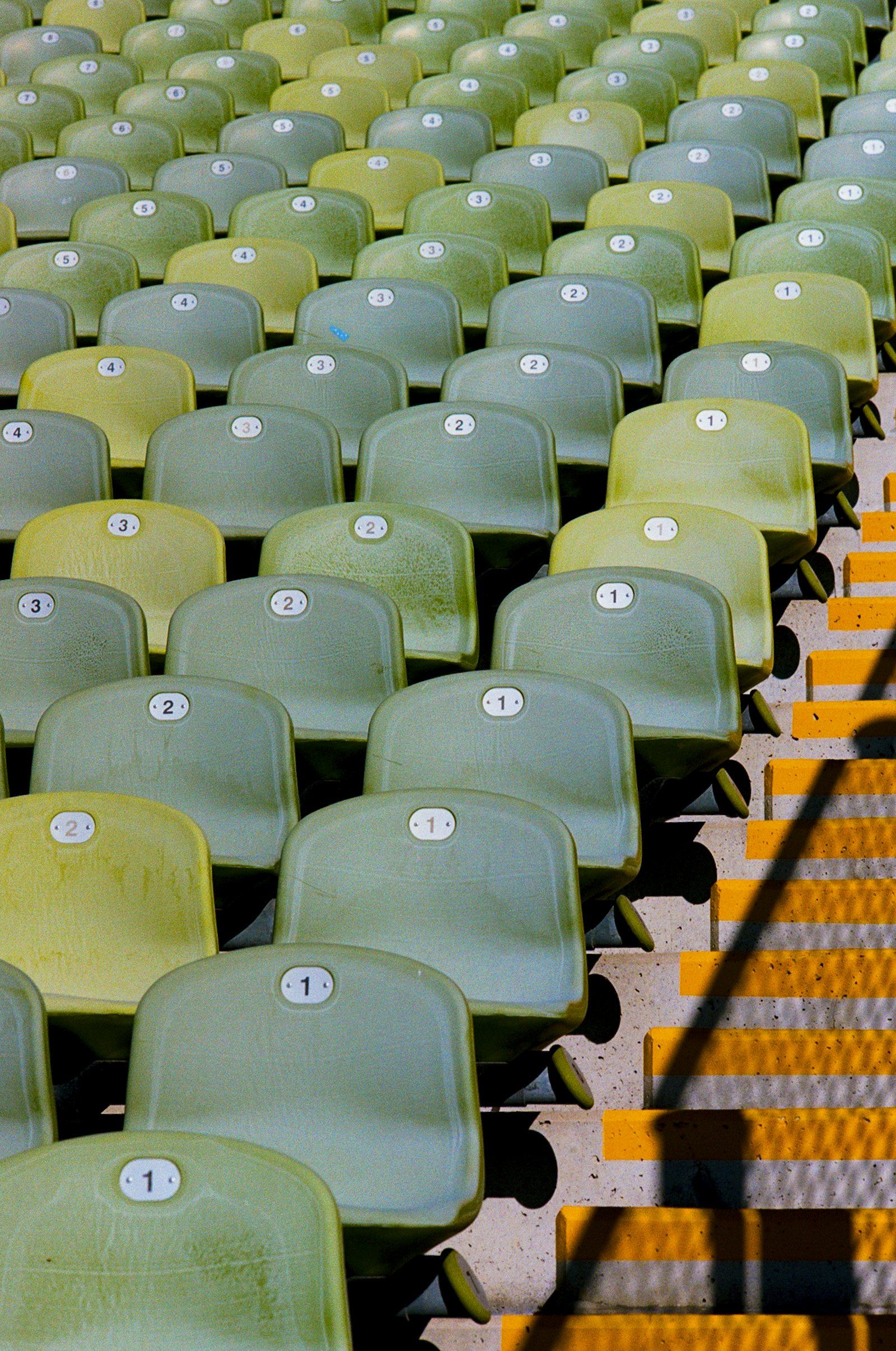
It's the 67th minute. FCK is a goal up. Somewhere in the upper bowl at Parken, a fan finishes the last sip of their pilsner. The cup is plastic-shaped, same wall thickness, same lip, same satisfying snap when squeezed, but it's PLA. They drop it in the green bin on the way back to their seat and forget about it.
Most stories about "compostable" cups end here. The cup goes in the right bin, the consumer feels good, the brand checks a box. What actually happens to that cup over the next five days is, in our view, the only part of the story that should matter, and it's the part we built the company around.
Within an hour of the final whistle, the cleaning crew empties every green bin in the upper bowl into a wheeled cart. The cart goes down the service tunnel, out to the back of the stadium, and tips its contents into one of two in-vessel compost machines we run on-site at Parken.
The bin contents aren't pure cups. They're cups, lids, food scraps, napkins, the occasional rogue plastic straw a fan smuggled in. Our compost machine doesn't care about the food scraps, they're food. The lids and napkins are PLA-based and break down on the same curve. The smuggled plastic gets sorted out at the maturation site later, but a few percent passing through doesn't break the loop.
The compost machine is a steel vessel with an oil-jacket heater, a slow auger, and a network of probes. It runs at 50–60 °C, which is hot enough to drive the microbial activity that breaks PLA down into water, CO₂, and biomass, and hot enough to hygienize the food waste so what comes out is safe to handle downstream.
The microbes doing the work aren't off-the-shelf. They're a culture our research lab has trained on PLA specifically, strains we isolated and grew because they handle our material faster than the generic mix you'd find in a municipal composter. We dose them in as an active inoculant at the start of each batch. (Shu Yuan wrote a separate post about that, if you're interested in the lab side.)
Three days in, the compost machine's contents look and smell roughly like rich potting soil. Volume has dropped by maybe 70%. The PLA is mostly gone. What's left is what we call pre-compost, biologically active material that needs another few weeks of maturation to be ready for the field.
Every five days, our partner Jysk Muld arrives at the back of Parken with a truck and lifts the pre-compost out. From there it travels to a maturation yard, sits in long aerated piles for four to six weeks, and gets screened, blended, and bagged.
The output is a peat-free compost, and that turns out to be the part of the story that matters most.
Peat is the workhorse of European horticulture. It holds water, holds structure, has the right pH for most ornamentals. It's also a fossil-equivalent, peat bogs sequester carbon at a glacial rate over millennia, and once you mine peat, that stored carbon goes to atmosphere and the bog ecosystem doesn't recover in any human timescale.
The push to phase out peat in Europe is real. The UK has banned retail peat sales for amateur gardeners; the Netherlands has set targets; Denmark is moving in the same direction. The constraint is that peat replacements have to actually work as a growing medium, not just exist as a sustainability story.
Compost from a closed-loop system like ours hits the right specs, with a useful side effect: every cubic metre of our compost a horticulturist buys is a cubic metre of peat they don't dig out of a bog. The match-day cup, the food scraps, the napkin, they end up doing real work in someone's garden bed, replacing a fossil input that the alternative pathway would have spent.
The cup matters. The compost machine matters more. The bag of compost a gardener buys at a Plantorama in Aarhus matters most.Bjarke Rasmussen, Director, Europe
We could put a sticker on the cup that says "100% compostable" and stop there. Most of the category does. The reason we don't is partly principle, half the point of building this company is to refuse to participate in the half-truth, and partly self-interest. The compost-bag-at-the-end-of-the-line is the reason the venue operator pays for the compost machine, the reason the municipality grants the environmental permits, the reason horticultural buyers care about the inputs upstream. The downstream story is what makes the upstream story real.
So if you ever see a GRØNBLÅ cup at Parken, here's what I'd ask you to picture: not the cup, but the bag of soil it becomes five weeks later. That's what we're actually selling.
The Parken page walks through the deployment in detail, the partners, the bins, the compost machine, and what we're learning week by week.