Blog · Policy
The CSRD playbook for venues.
If you're staring at E5-3 wondering where the numerator comes from, this is the working answer.

If you're staring at E5-3 wondering where the numerator comes from, this is the working answer.

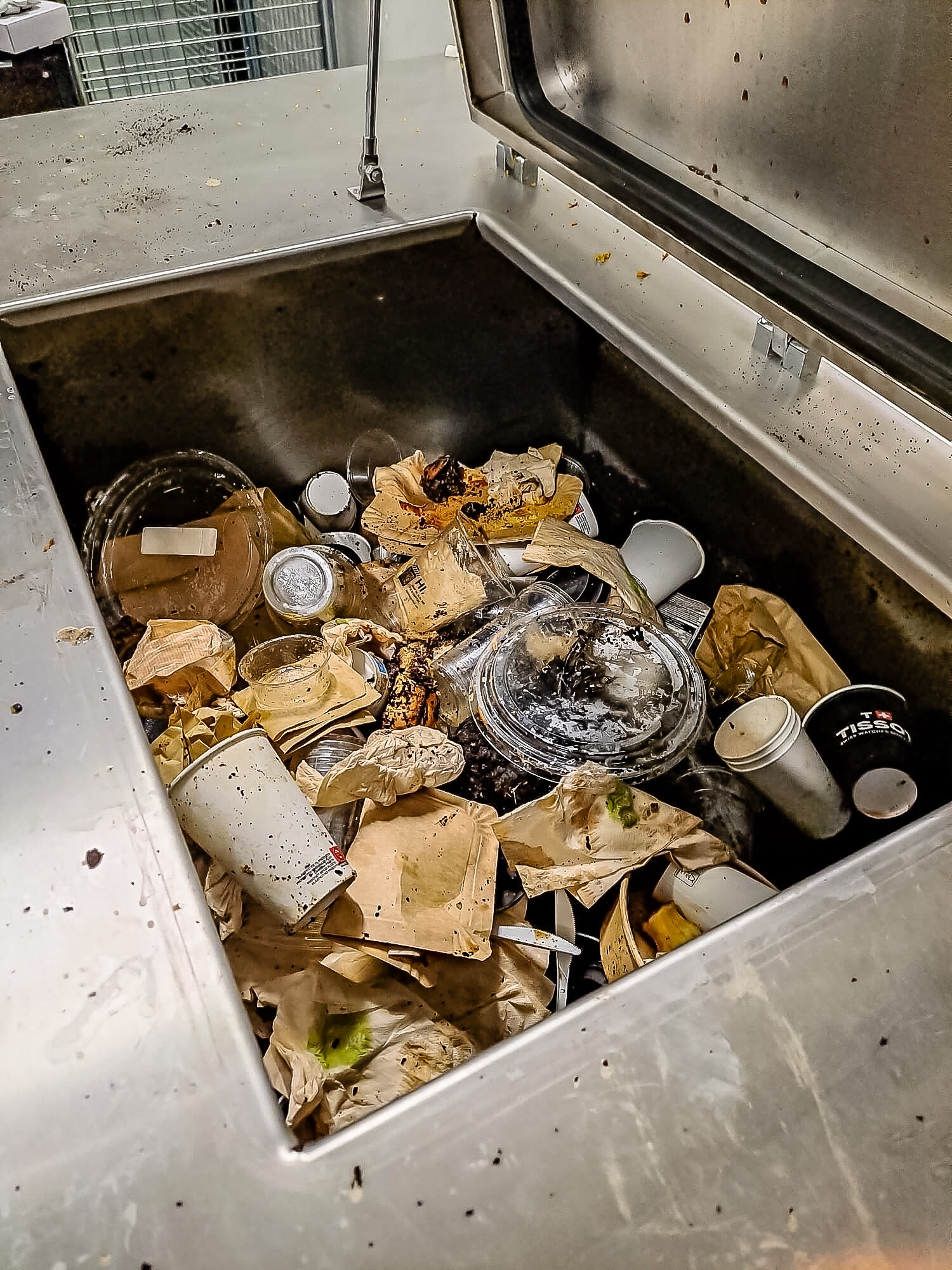
If you run a venue with more than a handful of events a year, the Corporate Sustainability Reporting Directive is no longer an abstraction. It is a set of disclosure points your sustainability lead is now writing into a document an auditor will sign. The pages in that document are short. The work behind them is not.
This is the playbook we share with operators who come to us asking the same question: "how do I report this in a way that survives the audit?"
The disclosure point most relevant to single-use plastic replacement at a venue is E5-3, "Targets relating to resource use and circular economy." E5-3 asks for measurable, time-bound, auditable targets. Aspirations don't count. "We are committed to circularity" is not a disclosure. "We reduced waste per guest by 30 % year-on-year, audited" is.
The trick is that E5-3 doesn't tell you what the target should be. It tells you it has to be measurable. So the structural decision happens before you write a sentence: what's your numerator and what's your denominator?
At Parken, the chosen ratio is tonnes of event-related waste / registered guests at the venue in the period. Both numbers are tracked in operations and verifiable. The 30 % reduction is the year-on-year change in that ratio. That's the framing we share with operators because it's the one that holds up when an external assurance provider asks where the numbers come from.
Three other E5 disclosures intersect with the same operation:
From our work with operators in their first CSRD reporting cycle, the questions that consistently come up:
We have answers to all five for the operations we run with. The auditor still asks. That's their job.
Once a deployment is live, we hand the operator a quarterly pack that contains everything needed to populate E5-3, E5-4, E5-5, and E1 for the relevant scope:
It is, deliberately, what the assurance provider asks for, before they have to ask.
CSRD reporting is sometimes framed as a compliance burden. For operators who have actually replaced single-use plastic with a closed-loop system, it is the opposite: it is the chance to put a real number on a real outcome, in a place where someone outside the company verified it. That is the part of the disclosure that does the most work, both for the regulator and for the prospect deciding whether to host their next event with you.
If you are in your first CSRD reporting cycle and the venue/sustainability lead is staring at E5-3 wondering where the numerator comes from, send them this piece. Or send them to us.
→ Parken and GRØNBLÅ: the closed loop at stadium scale, 30% less waste per guest
If you operate a venue and any of this is on your roadmap, we'd like to hear what you're up against. Two business days to a response.